The Songs I Didn’t Finish (and Why I’m Not Sorry)

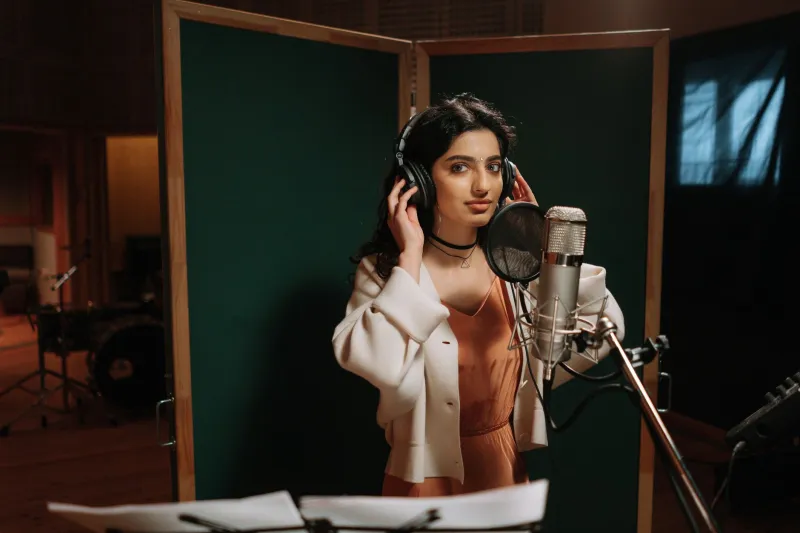
Photo: songwriter notebook unfinished lyrics acoustic guitar window UK studio, via c8.alamy.com
I have a notebook from 2021 that contains eleven songs. Two are finished. One became something else entirely. The other eight are fragments: a chorus with no verse, a verse with no chorus, a title that never found a body. For years I treated that notebook like evidence of a problem. Now I think it’s evidence of a process.
This is not a productivity essay. I’m not going to tell you to ‘finish more’ or ‘batch your creativity’ or turn your unfinished songs into content. I’m writing this because I meet a lot of UK songwriters who feel quietly ashamed of the drafts they’ve shelved, and I want to make the case that those drafts are doing something useful even when they’re doing nothing at all.
The tyranny of the finished thing
We live in a culture that treats completion as proof. A finished song is a song. An unfinished song is a failure, a delay, a sign that you lack discipline. I understand the logic. I’ve sat in writing rooms where the unspoken rule was that you don’t leave until there’s a full arrangement, even if the arrangement is held together with tape and hope. I’ve also watched those same rooms produce songs that sound finished and feel empty.
The pressure isn’t only internal. There’s the algorithm, the release schedule, the playlist pitch, the friendly question from a stranger: ‘What are you working on?’ It’s hard to answer ‘a drawer full of maybes.’ It’s easier to say ‘a new EP’ and then rush the last two songs so the sentence stays true.
I’m not against finishing. Some of my favourite songs needed a deadline and a push. But I’ve started to notice that the rush to finish often arrives before the song has had time to reveal what it’s actually about. A half-finished song is sometimes just a song that hasn’t told you its secret yet.
What an unfinished song actually holds
When I open my old notebooks, I’m not looking for salvage. I’m looking for atmosphere. There’s a fragment from 2022 that goes: ‘I keep the light on in the hall / for a version of myself I haven’t met.’ It never became a song. But the image stayed with me, and two years later it turned up in a different lyric, in a different key, with a different title. The unfinished draft wasn’t wasted. It was a holding place.
That’s what loose ends do. They hold a mood, a phrase, a rhythm, a question. They keep the door open. Sometimes they’re not meant to become songs at all. They’re meant to remind you that you were paying attention.
I think this is especially true for writers who work slowly, or who write in the gaps between other jobs. In the UK, we have a long tradition of part-time artists, bedroom musicians, and people who make things after the shift ends. That kind of creative life doesn’t always produce neat, finished objects on schedule. It produces fragments. It produces notebooks. It produces songs that arrive late, sideways, and better than they would have been if you’d forced them.
The spaces between projects
I’ve started to think of unfinished work as the space between projects. It’s not a void. It’s a room with the light on. When I’m stuck on a new song, I’ll often go back to an old notebook and read a line aloud. I’m not looking for a solution. I’m looking for a tone. The unfinished stuff keeps me company. It reminds me that I’ve been here before, that I’ve had ideas, that the dry spell is not the whole story.
There’s a practical side to this too. If you only value finished songs, you’ll start to write in a way that protects the finish line. You’ll avoid the strange chords, the uncommercial bridges, the lyrics that don’t resolve. You’ll edit as you go, which is sometimes useful and sometimes just fear with a red pen. Keeping loose ends around gives you permission to be bad on the page. That permission is not a luxury. It’s the beginning of anything good.
A defence of the drawer
I’m not saying every unfinished song deserves to be finished. Some of mine are genuinely not good. Some are exercises. Some are the musical equivalent of a scribbled phone number. But I’ve stopped throwing them away, and I’ve stopped apologising for them.
If you’re a UK songwriter with a folder called ‘old stuff,’ this is your reminder that the folder is not a graveyard. It’s a compost heap. Things break down. Things feed other things. The song you abandoned in 2023 might be the reason the song you write in 2026 sounds like yourself.
So here’s my small practice for keeping loose ends alive: once a month, I open an old notebook and read three fragments out loud. I don’t try to finish them. I just listen. Sometimes nothing happens. Sometimes a phrase lifts its head. Sometimes I close the book and make a cup of tea and that’s the whole session. That counts.
Finishing is a skill. So is leaving things alone. The artists I admire most seem to know the difference between a song that needs one more push and a song that needs to be left in the drawer until it’s ready to speak. I’m still learning that difference. The notebook from 2021 is still teaching me.