The Book With No Spine Left: What the Merch Table Hears After the Last Song
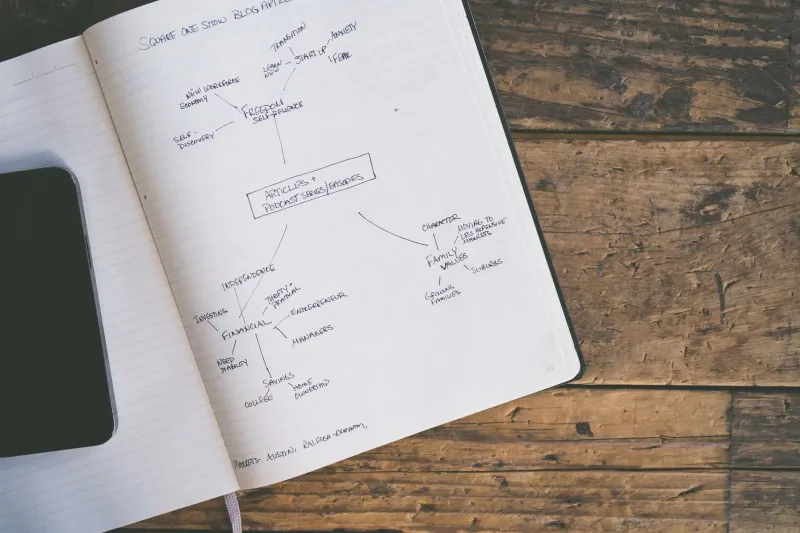
At the back of most rooms I play, somewhere between the tote bags and the card reader, there is a hardback notebook with a coffee ring on the cover and an elastic that gave up years ago. It is the guestbook. It travels in the van, gets rained on, and has more sellotape than spine. I leave it open by the merch table with a pen tied to it on a bit of string, and I try very hard not to stand over it like a teacher marking homework.
That last part matters. A guestbook only works if it feels like a scrap of paper passed under a desk, not a form with fields to complete. People write differently when nobody is watching. They are funnier, stranger, and occasionally so direct that I have to put the kettle on and sit down for a minute.
The Book That Smells of Van and Vanilla
The current book smells faintly of vanilla and the inside of a Ford Transit. It has a drawing of a dog in it from a night in Hull, a recipe for a martini that I have not tried, and a message from someone in Bristol that says: 'I came in sad and left less sad.' I have read that one more times than is probably healthy.
There are also entries that are pure nonsense, which I love. One person wrote 'your guitar sounds like a shed' and I have chosen to take that as a compliment. Another drew a small cartoon of me trying to tune a banjo with a fork. Fair enough. It is not a solemn artefact. It is a living bit of the room, with crumbs in it.
I started leaving it out because I wanted a low-pressure way for people to say something if they wanted to. Not everyone wants to queue up and make small talk after a gig. Some people want to hover near the books, buy nothing, and leave a line about the song that made them cry on the bus home. The guestbook gives them somewhere to put that. It also gives me something to read on the drive back, though I have learned not to read it while actually driving.
What People Write When There Is No Box to Tick
Without tick boxes, people tell you things. They request songs in ways that are half joke, half plea: 'Please play the one about the bus, my sister says you never play it.' They write about dead relatives, new jobs, bad Wednesdays, and the exact moment they decided to book tickets. One entry simply said: 'I was going to leave at the interval but I stayed.' That is a review, a confession, and a compliment all at once.
There are running jokes too. Someone once wrote 'more tambourine' and now it appears in almost every book, like a heckle in ink. A person in Leeds drew a tiny star next to the words 'the quiet one was good'. I know exactly which song they mean. I have never told anyone that.
The guestbook is not scientific. It is not a survey. It is closer to a weather report from the room. Some nights it is all jokes and daft drawings. Other nights it is full of careful handwriting and people apologising for writing too much. Both are useful. Both feel like the audience talking back in a whisper rather than a shout.
The Setlist Effect
I read the book on the way home, not at the merch table. That is partly because I do not want to be seen reading it, and partly because I need a bit of distance. A note written in the heat of a gig can land differently at 1am in a service station with a lukewarm coffee.
But it does shape things. Not in a 'you ask, I obey' way. More like a slow adjustment. If three separate people mention the same old song, I will dig it out and see if it still fits. If someone writes that a particular story went on too long, I will look at it again. If a line about a parent keeps turning up, I will think about where that song sits in the set, and whether it needs a bit more air around it.
The book has also stopped me from assuming what a room wants. I have had nights where the loud songs got the cheers but the guestbook was full of people thanking me for the quiet one. That is not a contradiction. It is just two different parts of the same evening. The guestbook catches the bit that does not always make it into the applause.
How to Invite Writing Without Setting Homework
I have made most of the mistakes available here. I have left a book out with no pen. I have left a pen with no book. I have put a sign on it that was far too wordy and made it look like a census. The version that works best is almost embarrassingly simple: one book, one pen on a string, and one line on a scrap of card that says 'Write anything. I read it on the drive home.'
No name required. No email address. No rating out of five. I mention it once from the stage, usually near the end, in the same tone I would use to point out the toilets. 'There is a book by the till if you want to write something. No pressure.' Then I leave it alone. If people feel watched, they write what they think I want to hear. If they feel ignored, they write what is actually on their mind.
I also try not to treat it as a tip jar for requests. It is not a jukebox. It is a conversation with a delay on it. Sometimes the best entry is the one that asks for nothing at all.
The Awkward Bits
Not every page is lovely. Someone once wrote 'your tuning was off in the third song' and they were right. Someone else wrote a fairly detailed critique of my between-song chat that I have chosen to interpret as a character study. There are entries I do not understand, entries in languages I cannot read, and one drawing that I think is a horse but might be a warning.
I keep them. I do not publish names or anything identifying, and I do not quote whole pages without asking. A guestbook only stays honest if it stays a bit private. It is not content. It is a record of a room on a particular night, and the people in that room did not sign up to be quoted on the internet.
What the Room Leaves Behind
The book with no spine left is not the most glamorous part of the show. It lives in a plastic box with the cables and the spare strings. But it is the only part of the night that keeps happening after the lights go up. I pack the guitar away, the chairs get stacked, someone finds a lost glove, and the book sits there with a new page of handwriting in it.
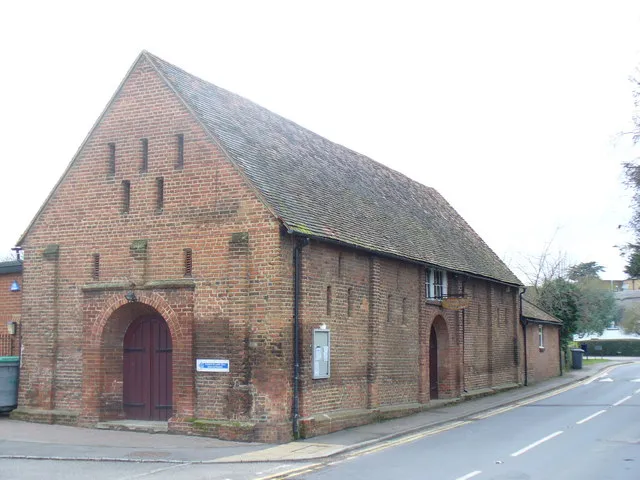
That is the quiet relationship I keep coming back for. Not the applause, though the applause is nice. The fact that someone took the lid off a pen, thought for a second, and decided to leave a bit of themselves on a page at the back of a village hall. I read it on the drive home. I always do.