The Piano in the Corner Has Its Own Ideas
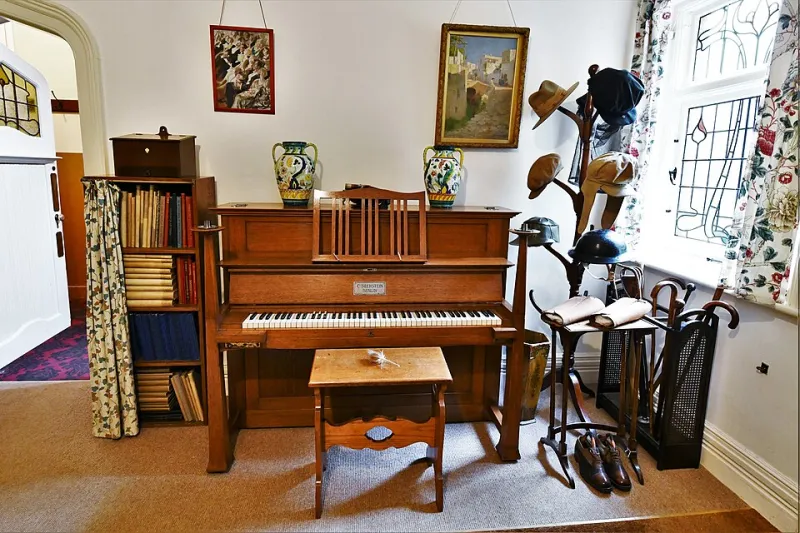
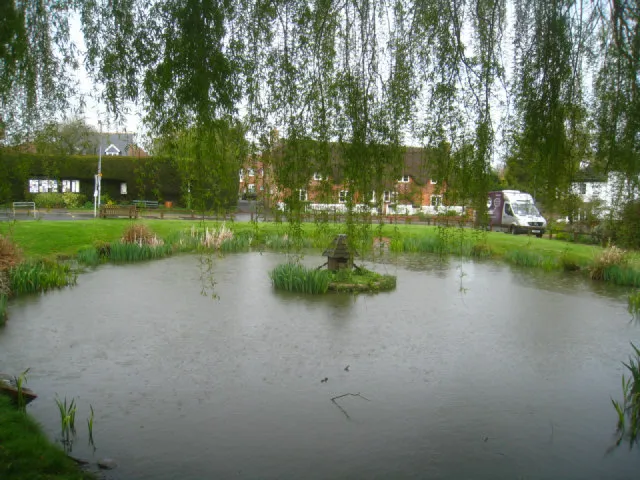
Photo: Michael Garlick , CC BY-SA 2.0, via Wikimedia Commons
The first thing I do in a village hall is not unpack the guitar. It is walk to the piano in the corner, lift the lid, press middle C, and listen to what the room has decided to give me. Twelve house pianos into this habit, I have stopped expecting a good instrument. I have started expecting an honest one.
Play It Before You Trust It
The house upright is a witness, not a colleague. It has heard the raffle, the bring-and-buy sale, the toddler group, the funeral. It has opinions. Before I choose a key, I play a slow scale and a single chord in the key I think I want. If the third and fourth notes fight, I move. If the pedal is a ghost, I plan for it. If the treble is a semitone sharp, I do not pretend I can fix it with good posture.
Twelve Uprights, Twelve Small Edits
- The tea-urn piano. Village hall, 1970s wood veneer, middle C sticking like a door that needs lifting. I avoided repeated C in the verse and let the guitar carry the pulse. Lesson: a broken note is not a crisis if you stop asking it to be the floor.
- The low-ceiling upright. Upstairs function room, bright and boxy, every chord arriving before I meant it. I played less. Two notes where I would usually play five. Lesson: a small room does not need a smaller song, just a cleaner one.
- The missing-pedal piano. Church hall, sustain pedal gone, the whole instrument dry as a biscuit. I played half-bar phrases and let the gaps do the holding. Lesson: sustain is a luxury; silence is a technique.
- The flat piano. Back room of a pub, a semitone under the guitar. I dropped the guitar a semitone and kept the vocal where it was comfortable. Nobody noticed except the bass player and me. Lesson: the audience hears the song, not the tuning fork.
- The slow-action piano. School assembly hall, keys yellowed, action heavy, fast runs impossible. I turned the intro into a ballad and the room leaned in. Lesson: tempo is an arrangement decision, not a moral one.
- The two-pedal piano. Bowls club, soft pedal missing, lid held open with a hymn book. I played quieter with my hands rather than my foot. Lesson: dynamics are in the fingers when the mechanism gives up.
- The humid piano. Community centre with a dehumidifier humming in the corner, keys sticking in the middle octave. I kept the melody out of the swamp and used the upper register for sparkle. Lesson: avoid the part of the instrument that is having a bad day.
- The sharp chapel piano. Old chapel, lovely tone, tuned a hair sharp. I tuned the guitar up to meet it and capoed where I could. Lesson: sometimes the room is the reference pitch.
- The hotel piano. Glossy, fragile, one dead key at the top of the melody. I rewrote the last line of the chorus to miss it. Lesson: a dead key can be a co-writer.
- The radiator piano. Village hall, piano against a radiator, going out of tune as the room warmed. I put the ballads early and the rowdy songs later. Lesson: tuning is not a fixed state; it is a schedule.
- The squeaky bench piano. Arts centre, bench loud enough to be a percussion instrument. I stood for the slow songs and sat only when the song could carry the noise. Lesson: the instrument includes the furniture.
- The heirloom piano. Front room with family photographs on the lid, keys worn in the middle. I played it like a guest, which is what I was. Lesson: some pianos are not there for you; you are there for them.
The Keys That Survive
After twelve, I have a shortlist of keys that survive a house piano: D major, G major, A minor, sometimes C if the third is honest. I avoid E flat if the action is tired, and I avoid anything with a repeated black-note figure if the keys are sticky. But the real skill is not memorising keys. It is listening for the two or three notes the piano can actually deliver, then building the arrangement around them. A house upright teaches you to write for the instrument in front of you, not the one in the brochure.
What I Ask For Now
For a while I sent riders asking for a tuned piano. Now I ask two questions: is it in the room, and can I get to it an hour before doors? If the answer to both is yes, I will make it work. I bring a tuner, a torch, a cloth, and a capo for the guitar. I do not bring expectations. The piano in the corner has its own ideas. My job is to find the song that fits them.