The Telly in the Corner: Playing to a Room That Didn't Ask for You
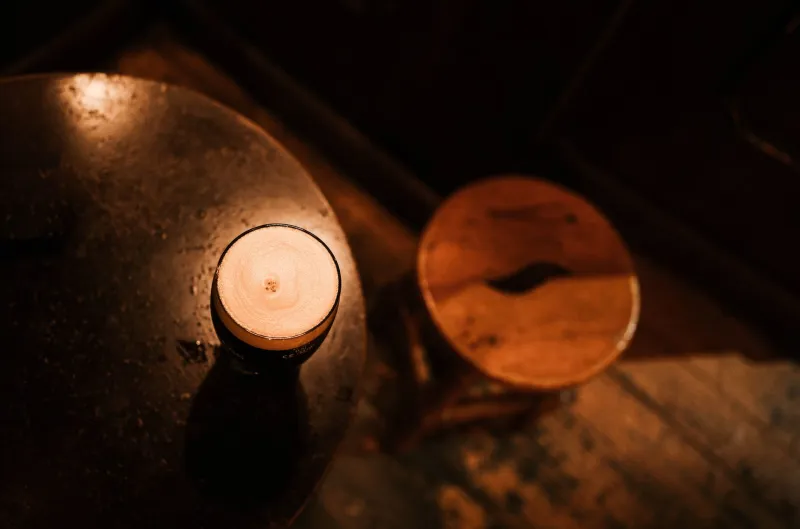
Half the room came for the football.
I want that framed. It is the most honest review I have ever had, and it arrived silently, from a man in a flat cap who looked at my guitar case, then at the telly, and made his choice without ceremony.
The gig in question was a Tuesday. I was wedged between a fruit machine that plays a tune nobody requested and a radiator with the rhythmic clank of a metronome holding a grudge. The landlord's brief was generous and vague in the way only pub briefs are: 'Just a bit of music, love. Eight till half nine. Mind the leads.' Above the bar, a screen showed the second half. Around me, forty people who were technically an audience and had absolutely not come to be one.
If you have played rooms like this — and if you are reading this in the UK, you probably have — you will know the strange mix of humiliation and freedom it offers. Nobody is here to judge you. Nobody is here for you at all. Which, perversely, is the most liberating thing in the world.
The brief, such as it is
There is no stage. There is a corner, a stool, a socket behind the fruit machine that may or may not be live, and a landlord who says 'you'll be fine' with the confidence of a man who has never had to chase a phantom buzz through a DI box.
Before you unpack, learn the geography. Where does the light fall? Which side of the room is the loud side — the bar, the till, the man who orders crisps during your quietest song? Which is the listening side, usually the tables near the fire exit or the back corner where the couple who have been coming since 1989 sit? Play to the near field first. The far field will catch up, or it won't.
And accept the terms. You are not the event. You are part of the evening, alongside the darts and the quiz machine and the dog that keeps setting off the door. That is not an insult. It is a job description.
Read the telly, not the room
On a match night, the telly is the real headliner, and fighting it is a fool's game. Do not turn up and expect silence for your fingerpicked ballad about a motorway service station. You will get the look. You will deserve the look.
The trick is to work with the rhythm of the room rather than against it. Half-time is your window. That is when the noise drops, the pint glasses get refilled, and forty pairs of eyes briefly have nowhere to be. Put your best, quietest, most attention-hungry song there. It will land on more ears in three minutes than the previous thirty managed.
Do not tune for four minutes between songs. Do not apologise for the room. Introduce yourself once, properly, then get on with it. A pub crowd is forgiving of a bad note and merciless about being bored.
The cover economy
A cover in a pub is not a compromise. It is a handshake. But there is a rhythm to it, and the rhythm matters more than the song.
Open with the big one and you become a jukebox; the room will treat you like one and start feeding you requests like coins. Save it too long and you will have lost the window entirely. The sweet spot tends to be the point where the room has half-noticed you and the match has gone to a break — that is when you play the thing they know. Something with a chorus you can hand over like a tray of drinks. Wonderwall is a cliché because it works. That is not a reason to hate it. It is a reason to respect it, and to pick your moment.
And here is the rule I wish someone had given me earlier: do not play the cover you love most. Play the one they love most. Keep your own favourite for the last ten minutes, when a handful of people are listening properly and the rest have gone out for a smoke.
Shorter than you think
The biggest mistake of my early pub years was playing too long. Ninety minutes feels like generosity. It is actually a hostage situation. Forty-five minutes, one short break, and a clean finish will leave a better taste than a heroic two-hour sprawl.
A shape that works: three songs to settle, one to introduce yourself properly, a handful of your own, the cover when the window opens, two to close. If the room turns, cut. If the room leans in, add one. Always have an ending ready before you need it. The pub is not a concert hall. It is a living room with a licence, and living rooms have bedtimes.
The regulars will tell you the truth
A man called Ray will ask for 'the one by the fella'. You will not know which fella. Ask him to hum it. He will hum four notes and look at you like you have failed a test you did not know you were sitting. Nod, smile, play something else. It is fine.
The regulars do not clap out of politeness. They look up, or they do not. They stop talking, or they do not. That is the feedback loop — not applause, attention. Learn to tell 'bored' from 'comfortable'. A room can be noisy and happy. It can also be noisy and utterly indifferent. The difference lives in the shoulders, not the volume.
And here is the strange gift of it. When one of them does look up — mid-song, mid-pint, mid-conversation — it lands harder than a standing ovation in a theatre. Because they owe you nothing. No ticket. No loyalty. No reason to be there at all. They just happened to be in the room when something good went past.
What the pub teaches you
Play enough of these and the lesson settles in your bones: you are not the point. The evening is the point. Your job is to be the good part of a Tuesday.
So shorten the set. Swallow the pride. Watch the telly, then watch the room. Keep the cover in your pocket until it can do some good. And when the landlord asks you back — and if you have done it right, he will — say yes before he changes his mind.
Then go and fetch your leads from behind the fruit machine.