Row Three, Second From the Aisle: Playing to the Person Who Came Back
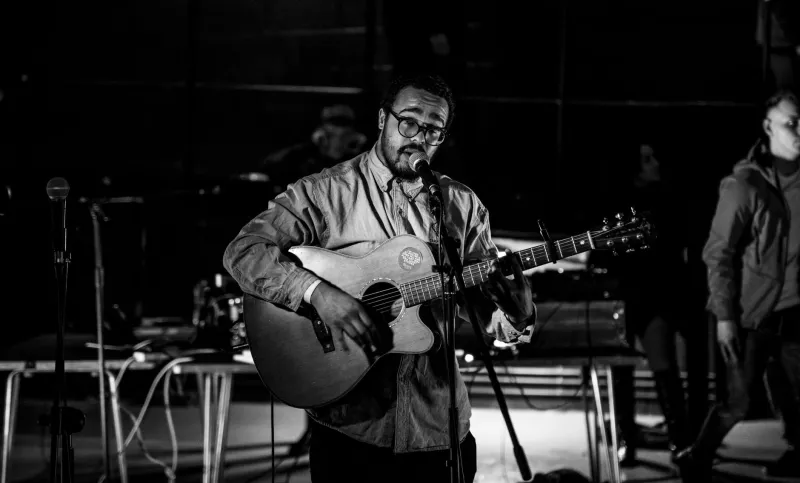
On a wet Tuesday in Sheffield, in the upstairs room of a pub that smells faintly of chips and old carpet, I counted twenty-three people. That is not a complaint. Twenty-three is a good number for a room with a low ceiling and a piano that has seen things. But one face in row three, second from the aisle, made the night feel different before I had played a note.
She had been at a gig in Leeds a few months earlier. Not a superfan, not a name on a list, just someone who had bought a ticket, stood near the back, and then come back. I recognised the coat before I recognised the face. And suddenly the setlist in my hand, which had been fine in the soundcheck, felt like a draft of something I had not finished writing.
The Face That Changes the Running Order
There is a particular kind of attention that arrives when you spot someone you did not expect. It is not distraction. It is focus. The room does not shrink to one person, but it does gain a centre. You start to notice which songs land in the body rather than the head. You notice where you were planning to explain too much.
I moved a song from fourth to second. I dropped the new one that needs a full room to carry it, and put in an older song that works better when there are more chairs than people. I slowed the third verse of something I have played hundreds of times, because I could see her mouthing the words and I wanted to leave a gap for her to finish the line. None of this was planned. It was closer to editing a letter after you have remembered who you are writing to.
A Letter With No Address
People talk about setlists as running orders, which makes them sound like train timetables. I think of them more like letters. There is an opening line, a bit of news, a change of subject, a thing you almost say and then don't. The songs are the paragraphs. The talk between them is the handwriting in the margin.
When you play to a room of strangers, it is easy to write a letter to nobody in particular. You aim for the back row, you project, you make the jokes broad enough to land. That is a skill, and I am not knocking it. But when one person in the room has a history with the songs, the letter gains an address. You stop performing the idea of an audience and start talking to an actual one.
That does not mean you ignore everyone else. It means you use the one face as a tuning fork. If a line reaches row three, it will usually reach the bar too. If the pause after the chorus feels honest to the person who knows the song, it will feel honest to the person hearing it for the first time. The one listener is not the whole room. They are a way in.
The Risk of Overwriting
There is a danger in this, of course. Play too hard to one person and the rest of the room becomes extras in a private conversation they were not invited to. I have done it. I have made a joke about a service station on the M62 that only two people understood, and watched the other twenty-one politely wait for the song to start again. I have changed a set around a request that was never made, only implied, and ended up playing something that did not fit the night.
So I try to keep it light. A shifted song, a different tempo, a shorter story. A setlist should still look like a setlist, not a coded message. The goal is not to make one person feel watched. It is to let them feel met. There is a difference, and the room can tell.
What I Have Stopped Doing
I have stopped announcing the dedication. Unless someone asks, or unless the song genuinely needs a frame, I keep the reason to myself. A setlist can hold a private note without turning it into a speech. The person who needs to know will probably know. Everyone else gets a song that sounds like it means something, which is all any of us are ever really trying to do.
I have also stopped treating the between-song talk as filler. In a small UK venue, the gap between songs is where the room decides whether it trusts you. It is where you can mention the last train, the fact that the merch table takes cash and card, the tea that is somehow still hot. It is where the letter gets its postscript. Playing to one person has taught me to write those bits more carefully, because they are the parts that make the songs feel like they happened to someone.
The Return Journey
After the Sheffield show, I packed the guitar while the room emptied. The woman in row three waited until the bar staff started stacking chairs, then said she had come because the Leeds gig had made her cry on the bus home, and she wanted to see if it would happen again. It did not, she said. But the order was different, and the night felt like a different letter.
I folded the setlist into my coat pocket. On the rail replacement bus back, I looked at the crossings-out and the arrows and the song I had moved twice. It looked like a draft. It was a draft. That is what a setlist is, really: a letter you write in the dark, to whoever turns up, hoping one line lands.