The Long Walk Back: On Endings That Don’t Need a Sequel
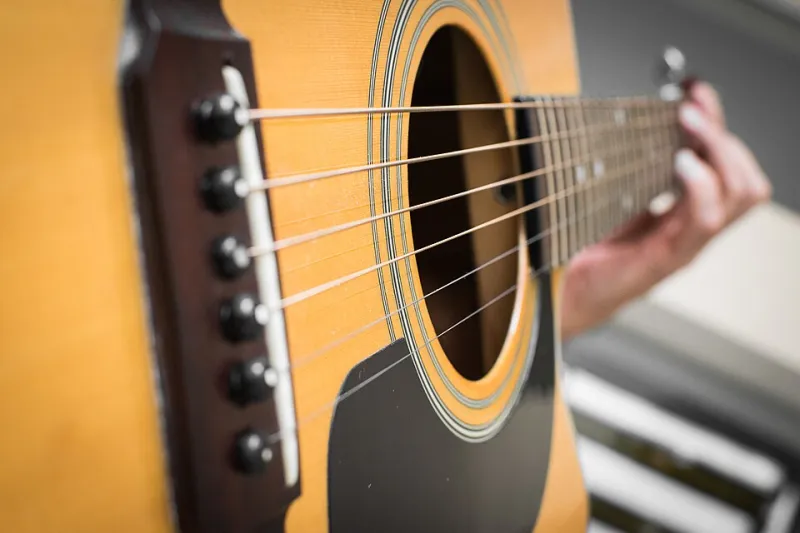
Photo: Barão Mochileiro, CC BY 3.0, via Wikimedia Commons
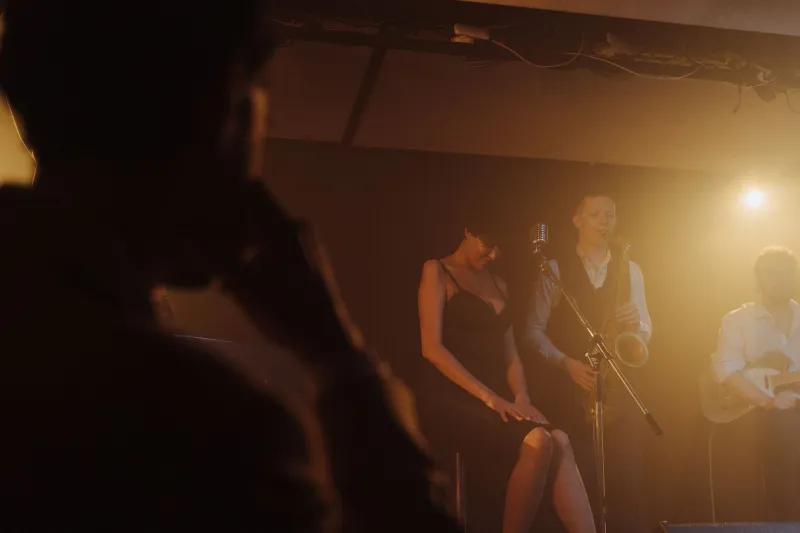
There is a particular kind of silence that lives in the corridor behind a village hall stage. It smells of floor polish and other people’s coats. I have stood in it many times, listening to a room clap for something I have already finished. The applause comes in waves: first the polite burst, then the drop, then the second surge as people realise the lights haven’t gone up. That second surge is the cue. It is also, if we’re being honest, a small piece of theatre in which everyone in the building is complicit.
We call it the encore. I’ve started calling it the long walk back.
The Mechanics of the Walk-Off
The choreography is well known. You play the song you have decided is the last one. You thank the room, maybe name the person who put the night on, and you walk off. If the venue is a pub with a function room upstairs, ‘off’ means a passage past the toilets and a stack of folding chairs. If it’s a proper arts centre, it means a wingspace with a monitor desk and someone eating crisps. You stand there. You do not speak. You wait for the clap to reach its peak, which it will, because audiences are generous and because nobody wants to be the first to stop.
Then you walk back on.
I have done this while genuinely exhausted, while half a verse from the end of my voice, and once — memorably — while holding a cup of tea I had been handed by the sound engineer. The audience saw me return with the tea. The illusion held anyway. We all agreed to it.
What It Costs
Here’s the part I don’t think audiences often see. The walk-off is not free. It costs a specific kind of energy that is hard to describe: the energy of pretending. For three minutes you are a person who has finished, and then you are a person who has not. You have to recalibrate your body, your voice, your face. If the last song was a quiet one, you now have to be light again. If it was a big one, you have to find somewhere bigger to go. That is a real ask at 10.40pm in a room where the landlord wants the tables back.
There is also a subtler cost, which is sincerity. The best endings in any art form feel inevitable. A good essay stops. A good album side ends. But the encore asks us to pretend that the ending was an accident, and then to pretend that the return was a surprise. By the second or third time you do it in a week, the surprise has worn thin. You are standing in a corridor thinking about the drive home, and the room is clapping for a version of you that is slightly less true than the one who just sang.
Why We Still Do It
And yet. I don’t want to be the person who abolishes the encore. There is something genuinely lovely about the ritual, especially in small rooms. In a big arena, the walk-off is a production number; in a 120-capacity room above a pub in Sheffield, it is closer to a conversation. The audience knows you can hear them. They know you are just behind that door. When they clap, they are not just applauding a performance; they are asking you to stay a bit longer. That is a generous thing to be asked.
The encore also gives a room a shape. It marks the difference between the set and the night. It allows a bit of collective decision-making in an evening that is otherwise entirely planned. I have seen audiences use it to request the one song you left out, and I have seen them use it to simply say thank you. The lie, if it is one, is a courteous lie. It says: we are not quite ready to stop being in this together.
A More Truthful Way to End
So what would an honest version look like? Not, I think, a ban. I’ve tried announcing ‘no encore’ from the stage, and it made the room feel like a fire drill. People kept clapping out of habit, then looked embarrassed. The ritual needs a replacement, not a scolding.
One option is to name the return. Instead of walking off and waiting, say: ‘We’re going to do two more, and then I’ll be at the merch table.’ That is not a lie. It gives the room the extra songs it wants and the ending it deserves. Another is to treat the encore as a second set — shorter, looser, maybe one song with no amplification, standing at the front of the stage. If it is clearly a coda rather than a resurrection, the energy changes. The audience isn’t clapping to summon you; they’re listening to something that has been offered.
The most honest ending I’ve found, though, is simpler: end on the song that ends it. Play the last song as if it is the last song. Thank the room. Walk off. If they clap, let them clap. If they want more, let the lights come up gently and let the room decide to go home. You can still come back — but come back as a person, not a rumour.
The Last Song Should Land
There is a moment, after the second surge, when the clapping starts to fade and people reach for their coats. It is one of my favourite moments in any venue. The room is still warm. Someone is laughing at the back. The bar staff are stacking glasses. Nobody is performing anything.
I don’t want to lose that moment to a ritual that has outlived its surprise. The encore is a lie we all agree to, and I’ll probably still do it on a Saturday night in a room where it feels right. But I’d like us to agree to it more honestly: as a second helping, not a conjuring trick. As a goodnight, said twice, because the first one was true.