Saved Seats: The Quiet Politics of a Guest List
There is a note on my phone called simply "list". It is not a setlist. It is not a budget. It is a running, slightly embarrassing register of people I want in the room when I play, edited in hotel corridors and on the top deck of the 43 bus, and every time I open it before a show I am reminded that the guest list is the least administrative thing I do all week.
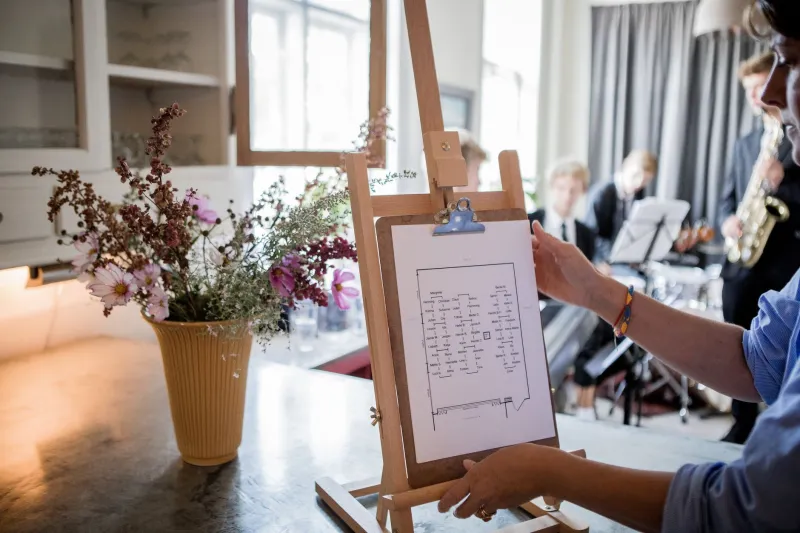
Because a list is never really a list. It's a drawing of a room. It says: these are the people I want to be singing at, and there are only so many chairs, so let's be honest about what we're doing here.
The bit that happens at half eleven at night
Most people assume the guest list gets sorted with the promoter, over email, sensibly. In practice it gets sorted at half eleven the night before, on my phone, with one eye on the capacity figure and the other on a text that says "my cousin's in town, is that alright?"
I play rooms between 60 and 200 people. That number matters. If the hall holds 120 and the promoter has already shifted 95 tickets, I have roughly ten comps before I start eating into the money that pays the sound engineer. Every name I add has a cost, and it isn't mine. That's the first thing nobody tells you when you start out: free tickets are never actually free, they just get paid for by someone standing slightly to the left of you.
So I try to keep the list small, deliberate, and visible. The promoter sees every name. I ask before I add. I offer to cover the ticket myself if it's someone I really want there. It's a small courtesy, and it has saved more than one working relationship.
The van driver goes on before the headliner
If you ask me who gets a seat first, it's not the person with the biggest following. It's the person who drove the van.
I have a friend called Ruth who has loaded a hired Transit at 7am in February, sat in a service station for ninety minutes while I panicked about a missing cable, and then stood at the back of a cold parish hall counting the takings in a Tupperware box. She does not ask for a ticket. She has never once asked for a ticket. She is, therefore, permanently on the list, plus one, forever, and I would fight a bishop about it.
That's the principle, really. The list should lean towards the people who make the night possible and the people who make it worth doing. Not the loudest. Not the ones who'll post about it. The ones who turn up in the rain with a spare DI box and a flask.
Then there's the other column. There's a woman in Sheffield who has been to eleven shows and brings me a handwritten note each time — not a card, a proper letter, folded into a square, usually with a line from a song I'd half forgotten I'd written. She gets a seat and a plus-one, and she gets it without asking. Some people are just part of the architecture of a tour by now.
The plus-one problem
Here's where it gets awkward, so let's do it honestly.
A plus-one is not one seat. It's a statement. If I say yes to everyone's plus-one, the room fills with people who are there with someone, watching the back of a head, talking through the quiet songs. If I say no to everyone, I've made it harder for people who don't want to walk into a room alone — and there are a lot of those, especially at the smaller gigs where the audience is standing in a horseshoe and everyone can see everyone.
My rule of thumb, which is not a rule and barely a thumb: plus-ones go to people who would otherwise not come. First gig on their own. Someone who's had a rough year. Someone whose partner drove them two hours. Not the person who'd bring a mate along because Wednesdays are better in pairs.
And I say that out loud, when I can. "I'd love to, the room's tight this time, can I put you down for the next one?" It's a sentence I've got better at. It still feels horrible to type.
Saying no without shutting the door
The hardest version of this is the person who asks every single time and never quite hears the answer. I've learned that a clear no, delivered warmly and early, is kinder than a vague maybe that turns into a name crossed off at the door.
A few things that have helped:
- Give the number. "We've got eight comps and they've gone" lands better than "it's complicated".
- Say when. "Not this one — the Leeds show in spring will be bigger." Then actually mean it.
- Never let the door decide. If someone's travelled and there's a spare seat, they come in. I'd rather stand at the merch table and explain it than have a person turned away at 7:55pm by a volunteer with a clipboard.
- Protect the promoter. They're the one who has to have the conversation if I don't. I don't get to be the nice one at their expense.
What the room tells you afterwards
After the show, I stand at the back with a cup of something and look at who's still there. It's never the people I worried about. It's Ruth, stacking chairs. It's the note-writer, hovering near the piano, wanting to say something and not quite managing it. It's two strangers who came alone and are now talking to each other about a B-side.
That's the whole point, really. The list isn't a favour ledger. It's a quiet attempt to make a room where the right people are slightly more likely to meet each other. If I get it wrong — and I do, most tours — the night still happens. But when it works, you can feel it in the first ten minutes: a room that's warm before anyone's played a note.
If you've ever been on one of those lists and never knew it, thank you. If you've ever been turned away, I'm sorry, and I probably still think about it.