Who Goes On First: How I Build a Fair Small-Room Bill
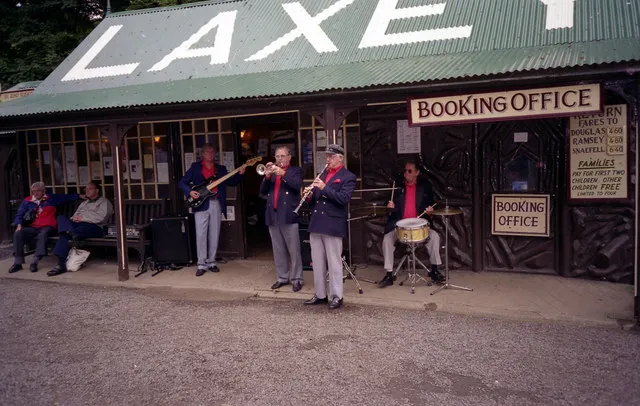
Photo: Dr Neil Clifton, CC BY-SA 2.0, via Wikimedia Commons
There is a specific silence that fills a small room at twenty to eight. The doors are open, the lights are half up, and about forty people are standing about holding drinks, waiting to be told what happens next. Whoever walks on stage into that silence has the hardest job of the night. I know, because I've done it more times than I can count, and I've also been the one standing at the back watching someone else do it while I fiddled with a tuner and pretended not to be nervous.
Somewhere along the way I stopped thinking of a support slot as a warm-up and started thinking of it as a shared project. These are the rules I've settled into. They're not laws, and I break my own occasionally, but they've made the difference between nights that felt like a bill and nights that felt like a queue.
1. Book the person, not the numbers
My first instinct used to be to look at streaming figures and pick whoever looked like they'd shift tickets. It's a rubbish way to build a night. What I actually want is someone whose set will make sense next to mine without being a copy of it, and who will turn up on time and be nice to the sound engineer.
So now I ask around. Who's been playing well in Leeds or Norwich this year? Who's got three songs that would stop a room? Who's got a van, or a friend with a van? A small venue bill is a conversation between two sets, and if the second voice is just an echo of the first, nobody in the room learns anything.
I also try to make sure the bill isn't three variations of the same person. If I'm doing a stripped-back set, a support act with a full band might be a brilliant contrast. If I'm loud, maybe put someone quiet in front of me and let the room lean in.
2. Soundcheck belongs to everyone
This one causes more quiet resentment than anything else on a bill. The headline act gets the longest check, obviously, because they've got more kit and more to go wrong. But that doesn't mean the support act gets a rushed line check at four o'clock while the headliner's drum riser is still being built.
What I've started doing is emailing a rough timetable the week before. Fifteen minutes for the opener, thirty for me, doors at seven-thirty. Everyone knows where they stand, and nobody has to do that horrible hovering thing by the monitor desk. If I'm running late, the opener goes first, full stop. It's their night too, and they've probably travelled further than I have.
Small things matter here. Learn their name before the day. Ask the engineer to write it down. Don't let the venue list them as 'guest' on the whiteboard by the stairs.
3. Keep the changeover short and say thank you
Twenty minutes between acts is plenty. It's enough to get a guitar off stage and a bass amp on, and it's short enough that the room doesn't have time to fall out of the mood. Long gaps kill small gigs. People drift to the bar, someone puts a song on the house PA, and by the time the next act starts you've lost the hush you spent an hour building.
I try to have my kit as close to a plug-and-play as possible so that the space between sets is a shuffle rather than a rebuild. And I always try to be the person who says thank you out loud, on the mic, with the opener's name in the sentence. It costs nothing. It also tells the room that the night has a shape, and that the person they just watched wasn't a delay before the main event.
4. The merch table is not a battlefield
There is a version of gig economics where the headliner's mate stands in front of the support act's CDs and cheerfully sells their own. I've seen it. It's bleak.
My rule is simple: support act gets first position and the first hour. If we're sharing a table, they get the end nearest the door, and I'll ask the venue to let them sell during their own set and the break after it before I set anything out. Where a venue will allow it, we split the card reader and I take the hit on the fees.
It also helps to agree things in advance. Who's bringing the float? Who's got change? Who's putting the sign up? A two-line message before the day saves a whole lot of awkward eye contact at ten past ten.
5. Pay them, thank them, and put them on again
I don't have a grand policy on this, and I know the money in a hundred-cap room is not what anyone would call generous. But if there's a fee, I want it to be a real fee, agreed beforehand, not a mysterious envelope at the end of the night. If there's a door split, I want it written down. If there's genuinely nothing, I want to say that clearly when I book them so nobody is surprised.
And then the last one: ask them back. Or better, ask to support them. Go and see their set when you've got a night off. Post about it badly and enthusiastically. The small-room circuit in this country runs on people remembering each other.
What the room gets out of it
From where I stand, a good bill is the closest thing live music has to a conversation. The opener sets a temperature. The headliner answers it. The audience, who mostly came for one of you and are about to leave with a new favourite, get the better end of the deal.
That silence at twenty to eight is not a problem to be managed. It's the best bit. Somebody has to walk into it. The least the rest of us can do is make sure they're looked after when they do.