Ink, Arrows and Crossed-Out Choruses: A Decade of Setlists in a Shoe Box
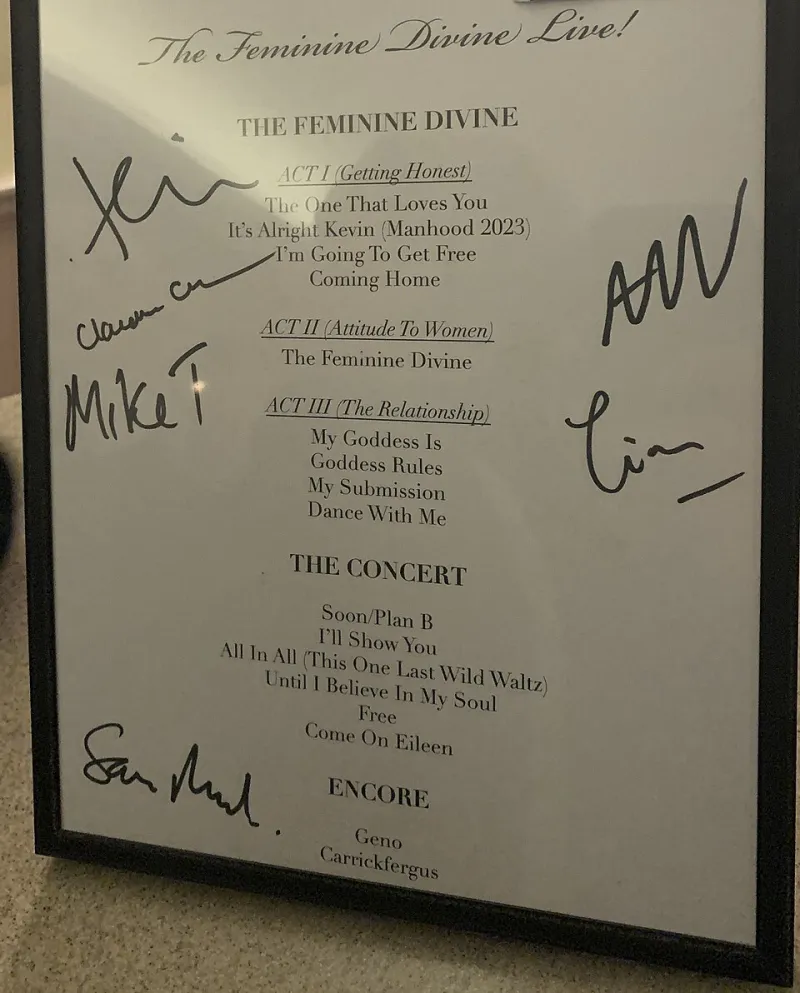
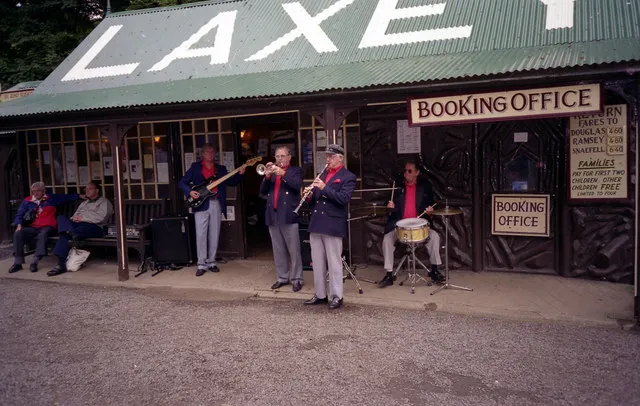
Photo: Unknown authorUnknown author, Public domain, via Wikimedia Commons
The shoe box lives on top of the wardrobe and it is not, strictly speaking, a shoe box anymore. It's a shoebox with a split corner, held together by two elastic bands and the general goodwill of not being moved very often. Inside it are about a hundred and forty pieces of paper, most of them smaller than a postcard, all of them covered in my handwriting.
Every one is a setlist. Some are neat, written at a kitchen table the night before with a pencil and a cup of tea. Some are barely legible, scrawled in a venue toilet at ten to nine in the evening because the one I wrote properly is still in the van. A few are on the back of a receipt from a motorway services. One is on the inside of a cigarette packet, which tells you how long ago it was.
I don't keep them because I'm sentimental about the songs. I keep them because they're the only honest record I have of what those nights were actually like.
What a setlist is actually recording
A setlist looks like a document about music. It isn't. It's a document about a room.
When I read 'Norwich, second song, swapped' next to a title, I don't remember the chord changes. I remember that the room was full of people who wanted to talk and the quiet song wasn't going to survive it. When I see an arrow drawn from one song to another at the bottom of the page, I know exactly what it means: the gig was running short and I had two minutes to decide whether to do the new one or the old one.
The paper keeps the decisions. The songs themselves I could list from memory. What I can't reconstruct is the sequence of small, panicked choices that made a particular night what it was, and that's precisely what's on the page.
The swaps nobody in the audience ever noticed
Here's a thing about setlists that fans who collect them already know: the sheet you get at the merch desk is almost never the sheet I started with.
There's a version from a Bristol show in 2019 with the opening song crossed out three times and a different one written above it in biro, then crossed out again, then the original reinstated with an asterisk. Three changes in the space of about six minutes, none of which anyone in the room would have registered. To them it was just the first song. To me it was a small crisis resolved by instinct.
I've kept a run of Scottish dates where the same slot was rewritten every night — Glasgow, then Edinburgh, then a tiny room in Dundee — because the crowd on each night had a different energy and I kept chasing the right opener. Glasgow got the loud one. Edinburgh got the slow one. Dundee got the one I hadn't played live in four years and had to relearn in the soundcheck.
Songs that refused to leave
Some titles turn up so often I've stopped seeing them. There's one song, an old one, that appears on maybe sixty per cent of the sheets in that box. It's not my best song. It isn't even my favourite. But it does something to a room in the first thirty seconds that nothing else does, and every time I try to retire it, someone asks for it, or I get to the venue and the shape of the night suggests it.
A setlist is a negotiation between what you want to play and what the night will allow. The recurring songs are the ones that kept winning that argument. Looking back through the pile, I can see the exact moment I gave up pretending otherwise — around 2021, when I stopped writing the title in full and started writing two letters instead.
The ones that quietly disappeared
Less obvious, unless you lay the sheets out in date order like I did one rainy Sunday: the songs that vanish. Not with a dramatic cut, just an absence. One week it's on every list, then it's on two out of five, then it's on none, and I never made a decision about it.
That's the bit that genuinely surprised me. I thought retiring a song would feel like a choice. Mostly it feels like a drift, and the paper is the only thing that catches it. There's a song I wrote in 2018 that I was completely certain about — it was going to be the centrepiece of the live set. I can see it in the middle of a dozen running orders. Then a gap. Then it's gone, and I honestly can't tell you why.
I've started playing a couple of those again. Not out of nostalgia, more as a way of checking whether the drift was right.
Why I still write them by hand
I could put the running order in my phone. I have, once or twice, and it's fine, except that a phone screen doesn't take an arrow. It doesn't let you scrawl a note in the margin at the last second — this one down a semitone, don't rush the ending, tell the story about the bus.
The margins are the best part. On the back of one Sheffield list there's a scribbled reminder to ring my mum. On a Cardiff one, a note about a fan called Beth who'd asked for a song and was standing front left. I played it. Her name is still on the paper.
That's what the shoe box really is. Not an archive of songs, but a decade of small, ordinary, unrepeatable evenings, written down quickly by someone who was in a hurry and didn't want to forget.