Say Less, Land More: Notes on the Thirty-Second Story

Photo: Sandro Halank, Wikimedia Commons, CC BY-SA 4.0, via Wikimedia Commons
I used to believe every song needed a preamble. A little context. A map. I would stand in a pub back room in Sheffield and explain the entire bus timetable that led to the song, and by the time I got to the first verse the room had quietly moved on to thinking about the last train home. The song had become an afterthought to its own introduction. I have since learned that the between-song moment is not a break from the set. It is part of the set. And like any part of the set, it needs editing.
The Intro That Ate the Room
I once introduced a song about a bus stop with a four-minute explanation of the route, the driver, the weather and a minor dispute about a lost glove. It was, in fairness, a good story. It was also longer than the song. By the time I played the first chord, the audience had been asked to hold too many details in their heads and had quietly put most of them down. The room was polite. The room was also gone.
At a village hall near Hexham, I kept talking through a phone alarm. Not my phone. Someone else’s. I could hear it, the audience could hear it, and I decided the best response was to talk louder. It was not. The moment needed a pause, a joke, or a simple ‘shall we wait?’ Instead it got a monologue. I learned more from that alarm than from most gigs.
What a Thirty-Second Story Does
A good introduction gives the audience a door into the song. It does not give them a floor plan. It changes the way they listen, slightly. It says: here is the room the song lives in. Then it gets out of the way.
‘This one is about the last train home and the person who didn’t get on it.’ That is enough. It is a fact and a feeling. It does not tell you what to think. It does not explain the writing process. It does not mention the producer’s dog. It simply opens a window and lets the song do the rest.
The thirty-second mark is not a law. It is a test. If you can say the true thing in ten seconds, say it in ten. If it genuinely needs a minute, make sure the minute is earning its place. Most of the time, it isn’t. Most of the time, the song is already doing the work.
Edit It Like a Lyric
I write stage patter the same way I write lyrics: badly at first, then with a knife. Cut the adjectives. Cut the backstory. Cut the bit where you explain why you wrote it, unless that bit is genuinely funny or genuinely strange. Cut the apology. Cut the ‘this is a new one, it’s not very good’ — that is not humility, it is a request for permission.
A useful exercise: write three versions of the same introduction. One at ten seconds, one at thirty, one at the length you’d tell a friend in the van. Use the ten. Keep the thirty for the encore if you must. Burn the van version. Record yourself on your phone and listen back. You will hear the ‘um’, the ‘sort of’, the bit where you laugh at your own joke before the audience has decided whether it’s funny. You will hear the moment the story stops being for them and starts being for you.
Three Rules I Actually Use
One fact, one feeling. ‘I wrote this in a Travelodge’ is a fact. ‘I was lonely’ is a feeling. Do not add the entire itinerary, the room number and the breakfast menu. The song can hold the rest.
If it needs a diagram, cut it. If you find yourself saying ‘so, basically, the geography is…’ you have lost. The audience does not need the map. They need the weather.
Never apologise for the song before you play it. ‘This is a new one, it’s not very good’ tells the room to lower its expectations. Just play it. If it’s not very good, they’ll decide for themselves. They usually decide more kindly than you would.
Stop at the first laugh. This is the hardest one. A laugh is a lovely thing, and the temptation is to stay there, to add another line, to milk it. Don’t. Take the laugh, smile, and play the song. The laugh was the door. Don’t build a porch.
When to Say Nothing
Some songs need no introduction at all. A breath, a count-in, a tuning pause. In a pub back room in Bristol, I stopped introducing a song about a phone call and the room leaned in. The silence did more than the preamble ever had. If the song is clear, the intro is a spoiler.
This is not an argument against talking. It is an argument for choosing. You can tune, sip water, say ‘this is a song about X’ and go. You can say nothing. You can tell a thirty-second story that lands like a hand on a shoulder. The space between songs is part of the set, and it deserves the same care as the songs themselves.
A Small Exercise
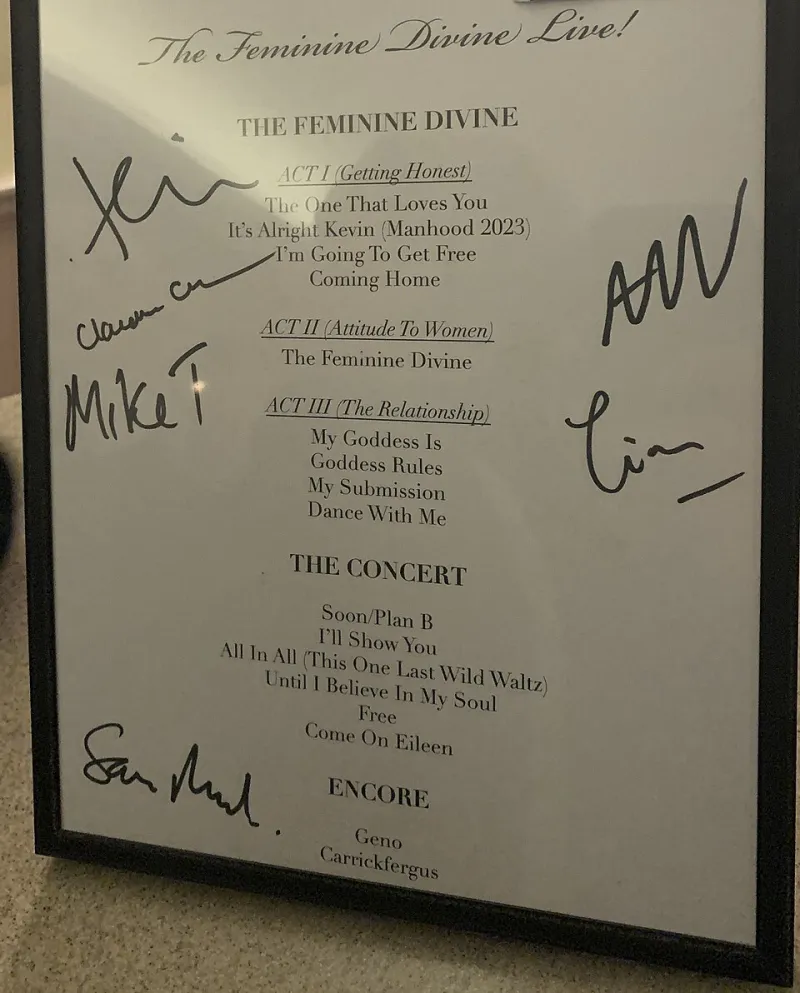
Next gig, write your introductions on the setlist. Give each one a word count. Try one with no words at all. Notice which ones get a laugh, which get a nod, and which get the room looking at the floor. The audience will tell you. They are very good at telling you, if you stop talking long enough to listen.
Thirty seconds is enough to say something true. The rest is usually filler. Say less, land more.